Inheritance occurs after the death of the testator, with the key issues relating to determining the extent of the estate and determining who the testator’s heirs are. Inheritance and the inheritance procedure are precisely regulated in the Inheritance Act, which is the main source of inheritance law in Slovenia. The testator himself has a certain influence on the inheritance itself, as he can largely decide during his lifetime who his heirs will be and who will be entitled to inherit, by drawing up a will. In such cases, we speak of testamentary inheritance.

We also know the opposite case, when the testator does not draw up a will. In such a case, inheritance by law comes into play. This means that the law is the one that clearly determines in such a case who the entitled heirs will be and what their inheritance shares will be. However, restrictions also apply to the testator, since he cannot completely exclude heirs who would be entitled to inherit from him by law through a will. In such cases, compulsory inheritance comes into play, where compulsory heirs are entitled to inherit despite their exclusion from the testator’s will.

Inheritance by law
Inheritance by law comes into play when the will of the testator is not expressed in a will. The law clearly determines who has priority in inheritance, namely by determining the orders of inheritance, which follow each other in order. The general rule is that those closest to the testator have priority in inheritance. Thus, in the first order of inheritance, the testator’s descendants and his spouse or common-law partner are in the first order of inheritance. In the second and third order of inheritance, more distant relatives are in the second and third order of inheritance. If there are heirs in the first order of inheritance, heirs from other orders of inheritance will not be entitled to inherit. Heirs by right of entry have priority over the remaining orders of inheritance. In this case, this mainly concerns the descendants of heirs who died before the testator, which ensures that the descendants or heirs of the deceased heir inherit.
Inheritance by will
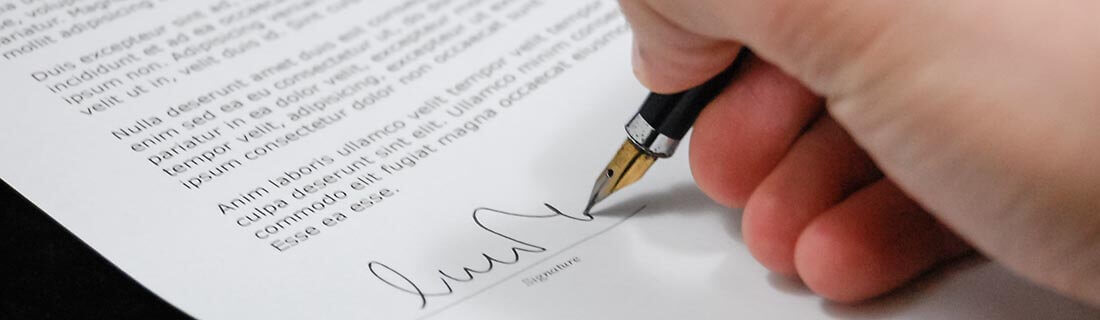
Inheritance by will comes into play when the testator has already prepared a valid will during his lifetime. There are several types of valid wills, of which the most popular are usually a written will with the signature of the testator and two witnesses, or a handwritten will that does not even require the signatures of special witnesses. As already mentioned, the will of the testator is also limited, since, except in exceptional cases, he cannot exclude the “closest” heirs or necessary heirs by will. He can exclude necessary heirs from inheritance only if there are reasons for disinheriting the heir or when there are circumstances that indicate the heir’s unworthiness to inherit. In practice, these are mainly cases where the heir has committed a serious moral offense against the testator, namely during his lifetime, and it would therefore be unfair to expect that the latter would have the right to inherit from him. If, for any reason, the testator wishes to prevent persons not listed in the will from inheriting from him and would like only persons designated by him to be entitled to do so, he can do so only by concluding one of the valid inheritance contracts during his lifetime, by which he transfers his property to such entitled persons. Usually, in such cases, a life support contract , a maintenance contract or a delivery contract are concluded, and their main purpose is that it is not a unilateral favor of the testator, but a bilateral pecuniary legal transaction, where rights and obligations apply to both parties. An inheritance lawyer will tell you more about the details .
What is inheritance or what is its purpose?
Inheritance primarily ensures legal succession after the deceased testator. Heirs who inherit from the testator are the universal legal successors of the testator. This means that both the rights and obligations of the testator are transferred to them. Inheritance does not make sense for an heir when the testator’s obligations are greater than his rights or his assets. In such cases, it is better to avoid inheritance, namely by having the heir renounce the inheritance. The easiest way to renounce the inheritance is at the probate hearing itself by making an appropriate statement. In certain cases, however, it is also possible to renounce the inheritance in advance in agreement with the testator, but only if it concerns a descendant or spouse. Given that inheritance can be a very important life event for an individual, the way in which it occurs and who is entitled to the inheritance itself and under what conditions is regulated in great detail in the Inheritance Act, which an inheritance lawyer can tell you more about .